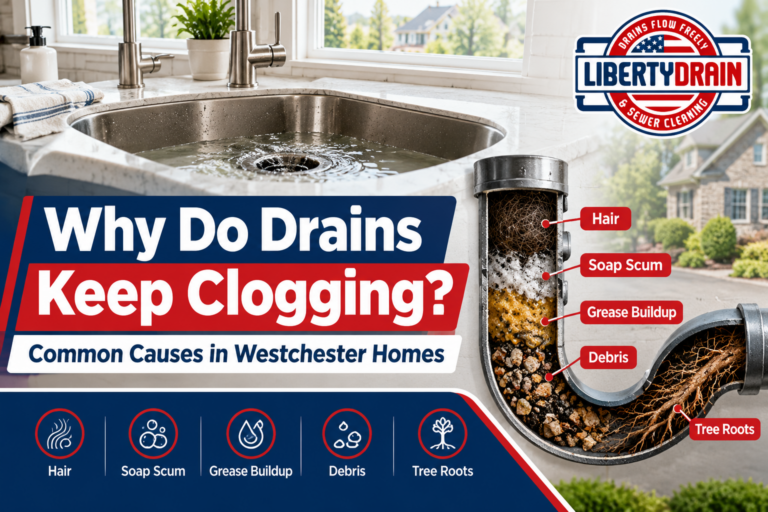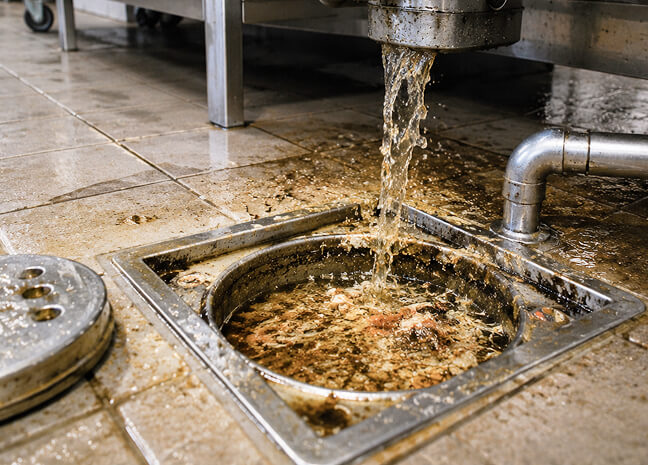
If your kitchen sink gulps and burps every time you run water, you already know something’s off down there. Maybe your bathtub drains slower than it did last year. Maybe there’s a smell near the laundry room that wasn’t there before. These aren’t random annoyances. They’re your pipes telling you it’s time to talk.
We’re Liberty Drain, and we’ve spent years crawling under Westchester homes, snaking lines, and explaining to homeowners why their “fine” drains weren’t actually fine at all. So, let’s answer the question you came here for, plain and simple.
How Often Should You Schedule Professional Drain Cleaning for Most Homes?
Most Westchester homes do well with professional drain cleaning once a year. That single yearly visit clears out grease, soap scum, hair, and mineral buildup before they turn into a real clog. Older homes, or ones with cast iron pipes, often need it twice a year instead. If you’ve got a big family, a garbage disposal that runs constantly, or a septic system, once a year might not cut it either.
Here’s the thing nobody tells you: drains don’t clog overnight. They narrow slowly, week after week, until one day your shower is standing in two inches of water. By then, you’re not maintaining your drains anymore. You’re rescuing them.
Signs That Mean You Need Drain Cleaning Sooner Than Planned
Your home usually gives you a heads up before things get bad. Slow draining sinks or tubs are the first clue. Gurgling sounds from your drains when the washing machine runs is another. If more than one fixture is acting up at the same time, that’s often a sign of a main line issue, not just one clogged pipe.
Bad smells are a big one too. A sour or rotten odor near a drain usually means organic material is sitting and decomposing somewhere in the line. And if you’ve had the same clog come back two or three times after using a store-bought drain cleaner, that chemical is only eating a tunnel through the blockage. It’s not clearing the pipe. It just buys you a few more days before the same mess returns, usually worse.
Why Drain Cleaning Frequency Depends on Your Home’s Age And Plumbing Type
Not every house needs the same schedule, and that’s honestly where a lot of homeowners get confused by generic advice online. A newer home with PVC piping handles grease and debris better than an older home with galvanized steel or cast-iron pipes. Those older materials corrode from the inside, which creates rough patches where waste catches and builds up faster.
Homes near mature trees also deal with root intrusion, especially in older Westchester neighborhoods with clay sewer lines. Roots search out moisture, and a tiny crack in an aging pipe is an open invitation. If you’ve got big trees near your sewer line, we’d actually recommend inspecting that line every year, even if your indoor drains seem fine.
What Happens During A Professional Drain Cleaning Service?
We don’t just run a snake down your drain and call it done. When we come out, we typically start with a camera inspection to see exactly what’s happening inside the pipe. This tells us if we’re dealing with grease buildup, root intrusion, a collapsed section, or just years of everyday debris.
From there, we use hydro jetting for most clogs. It’s a controlled blast of high-pressure water that scrubs the entire inside of the pipe, not just the middle of it like a cheap snake does. Think of it as the difference between wiping a counter with a dry towel versus actually scrubbing it. One looks clean. The other is clean.
How Often to Clean Household Drains Room By Room
Different drains in your home wear out at different speeds, so a room by room approach actually makes sense here.
- Kitchen sinks handle grease and food particles daily, so they benefit from cleaning every 6 to 12 months
- Bathroom drains collect hair and soap scum, and yearly cleaning usually keeps them running smooth
- Laundry room drains deal with lint and detergent residue, and a yearly check catches problems early
- Main sewer lines should get inspected once a year, especially if your home is older than 20 years
If you’re already noticing slow drainage in more than one of these areas, don’t wait for your scheduled visit. Call sooner. It’s cheaper to fix a slow drain than a burst pipe at 11pm on a Saturday.
Why Regular Drain Cleaning Saves Westchester Homeowners Money Long Term
We get it. Paying for a service when nothing seems “broken” feels backwards. But here’s what we’ve seen over and over: homeowners who skip yearly cleaning end up calling us for an emergency instead, and emergencies cost more. A lot more.
Backed up sewage, water damage to flooring, and mold growth behind walls are all things that start as a small clog nobody dealt with. Regular professional drain cleaning in Westchester costs a fraction of what water damage repair runs. We’d rather show up for a routine visit than a flooded basement, and honestly, so would you.
How Liberty Drain Builds A Cleaning Schedule Around Your Home
Every home is different, so we don’t hand out a one size fits all schedule. When we visit, we look at your pipe material, the age of your home, your household size, and any history of clogs. Then we build a realistic plan around that, not around some generic industry number.
Some of our Westchester clients need a visit every 6 months because of old cast iron lines. Others go a full 18 months between cleanings because their newer plumbing handles waste better. We’ll tell you honestly what your home needs, even if that means less frequent visits and a smaller bill for us. That’s just how we do business.
Getting Started with Liberty Drain
If it’s been over a year since your last drain cleaning, or you can’t even remember the last time, that’s your sign. Give us a call and we’ll walk through what your home actually needs, no upselling, no scare tactics. Just straight answers from people who’ve seen what happens when drains get ignored too long.
Frequently Asked Questions
How often should you schedule professional drain cleaning for an older home?
Older homes with cast iron or galvanized pipes typically need professional drain cleaning every 6 months. These materials corrode over time, creating rough interior surfaces where grease and debris catch easily. Newer homes with PVC piping often stretch that out to once a year safely.
Can I clean my own drains instead of hiring a professional?
DIY methods like baking soda, vinegar, or plungers work fine for minor surface clogs. They can’t reach buildup deeper in the pipe or clear tree root intrusion in sewer lines. A professional cleaning removes buildup along the entire pipe wall, not just the visible section near the drain opening.
Is hydro jetting safe for older plumbing systems?
Hydro jetting is safe for most pipe materials when a trained technician controls the water pressure correctly. Before jetting, we run a camera inspection to check for weak spots or existing damage. This step protects fragile older pipes while still clearing years of buildup effectively.
Does drain cleaning frequency change if I have a septic system?
Yes, homes with septic systems often need more frequent drain cleaning, sometimes every 6 months. Septic systems are more sensitive to grease, food waste, and harsh chemicals than municipal sewer connections. Regular cleaning protects both your household drains and your septic tank’s overall lifespan.
What’s the difference between drain cleaning and drain clearing?
Drain clearing removes a specific blockage causing an immediate problem, like a clogged shower drain. Drain cleaning is a broader maintenance service that clears buildup along the entire pipe before problems start. Most homeowners benefit from scheduled cleaning rather than waiting for a clog to force clearing.
How do I know if my slow drain needs professional help right away?
A single slow drain often responds to basic home remedies without urgency. Multiple slow drains, gurgling sounds, or sewage odors usually point to a bigger issue in your main line. These signs mean you should call a professional within a few days, not wait for a routine visit.